
Human urine odor that cleaning hasn’t solved? We treat it at the source — subfloor, concrete, garages, hardwood, and drywall — discreetly and without judgment.
Serving California since 1989·5-Year Odor-Free Guarantee
Human urine odor in a home almost always comes with a story that isn’t easy to talk about. A parent whose incontinence got worse over time. A family member who was ill. A loved one who has passed away or moved into care, and the house needs to be ready to sell or rent. A tenant who left a unit in bad condition. A property that was neglected for years.
We’ve been doing this long enough to have seen all of it. We treat every job with professionalism and discretion, and we don’t need you to explain more than you want to. What we need to know is where the odor is and how far it’s gone — and the inspection tells us that.
Once human urine penetrates porous building materials, the remediation problem is similar to pet urine: contamination can remain in carpet padding, wood subfloors, concrete, drywall, and other absorbent materials after surface cleaning. It dries into the material and releases odor again whenever humidity or heat reaches it.
That’s why cleaning helps for a while and then the smell comes back. Carpet cleaning, deodorizers, and household products work on the surface. The source is below it.
Long-term incontinence, especially from a bed or a favorite chair, tends to concentrate contamination in a few specific areas — and over months or years, those areas go deep.
Around and under the bed, where contamination accumulates night after night.
Under and around recliners and favorite chairs.
Around the toilet, along the floor, and at the base of walls and cabinets — urine can run into floor edges and be absorbed by baseboards, cabinet bases, drywall, and the subfloor underneath.
On the path between the bedroom and the bathroom.
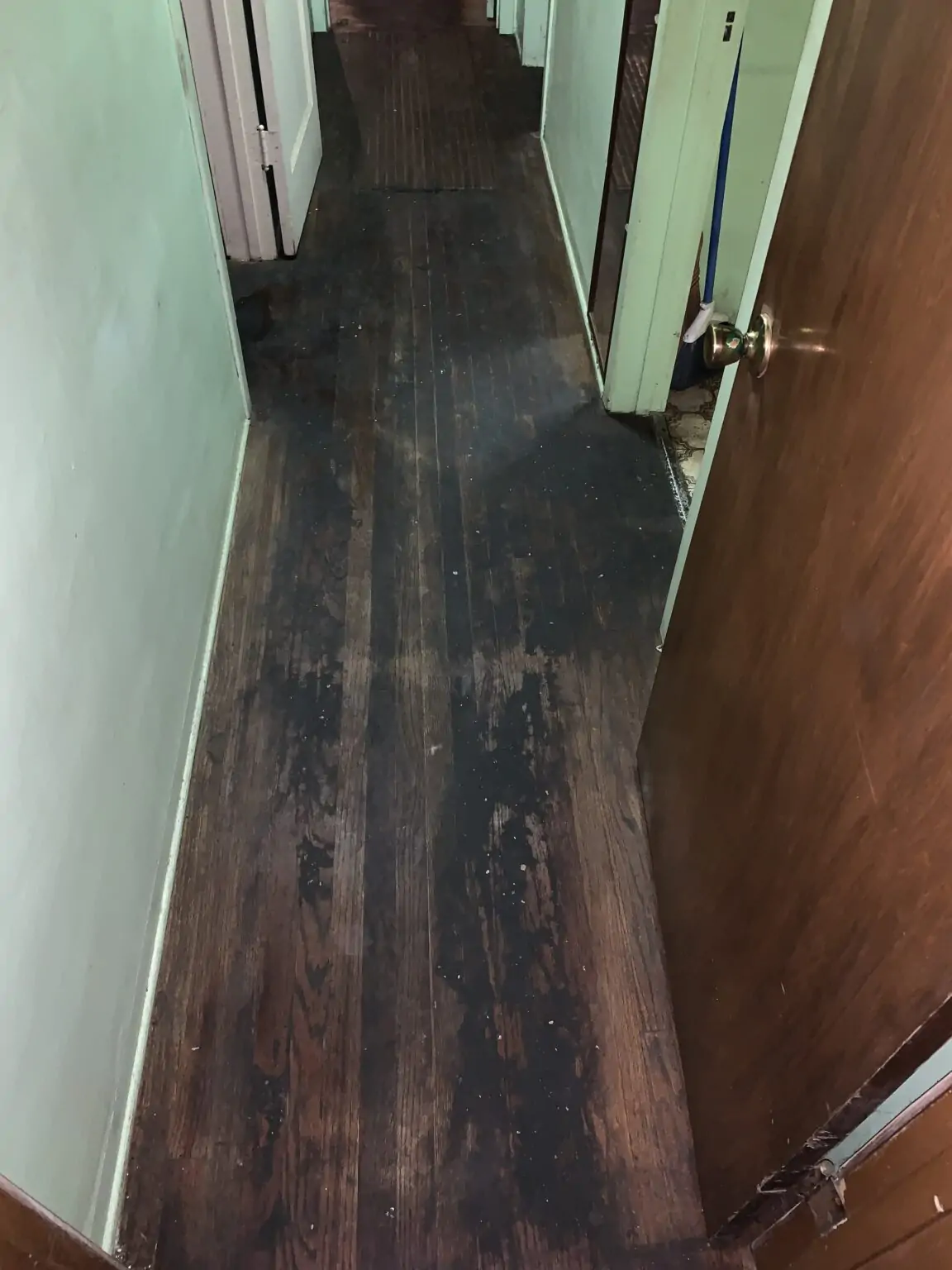
Urine runs into the seams between boards and can reach both the wood and the subfloor below.
Repeated urination soaks into the concrete slab, joints, and wall bases.
The pet odor inspection finds the contamination and tells you exactly what it will take — before any work begins.
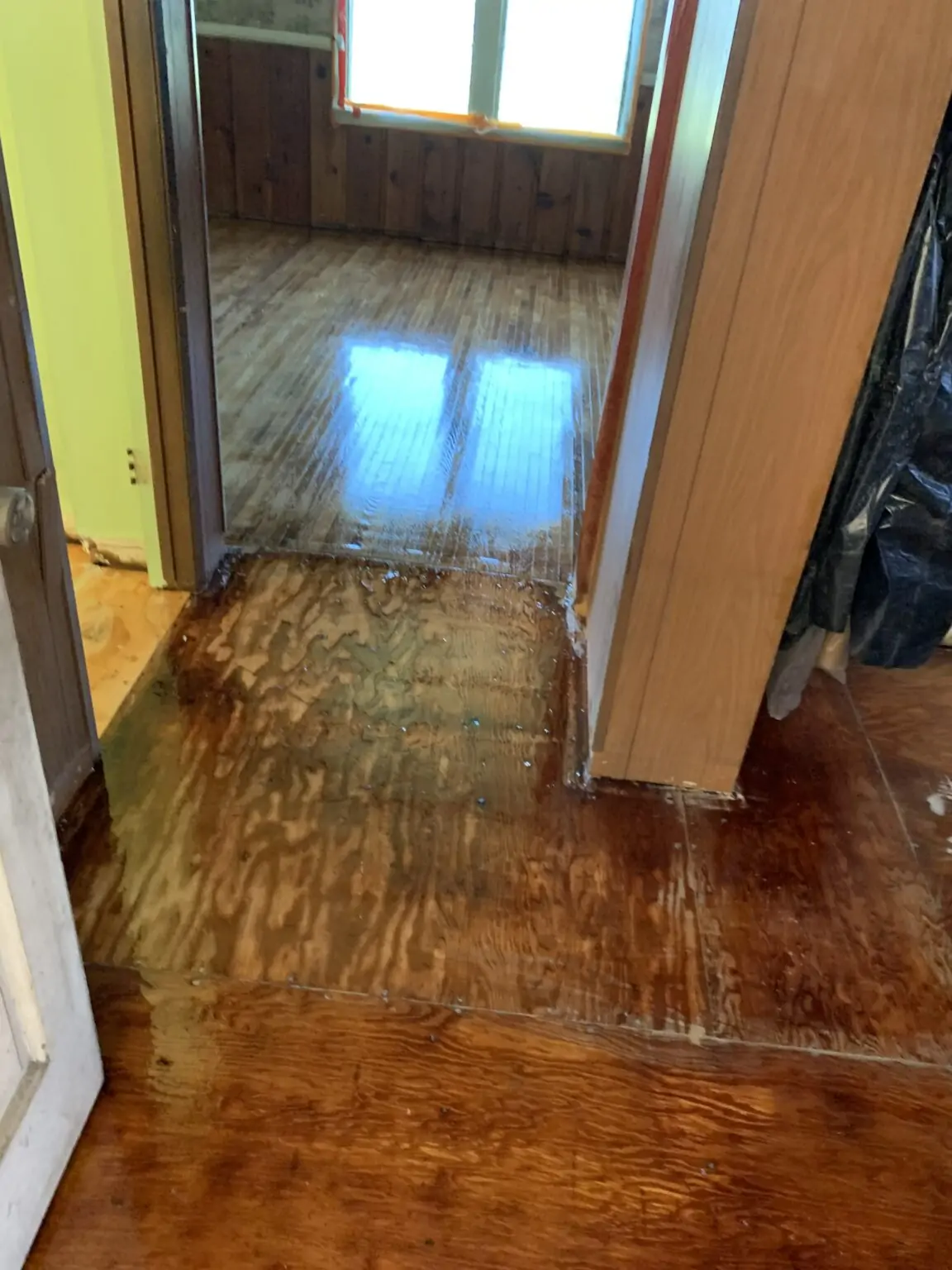
The most common surface we treat. Once carpet and pad are removed, the plywood underneath is prepared, dried, and sealed. See our subfloor odor sealing page.
In slab-on-grade homes, urine soaks straight into the concrete under the carpet. The slab is ground and sealed. See our concrete urine odor removal page.
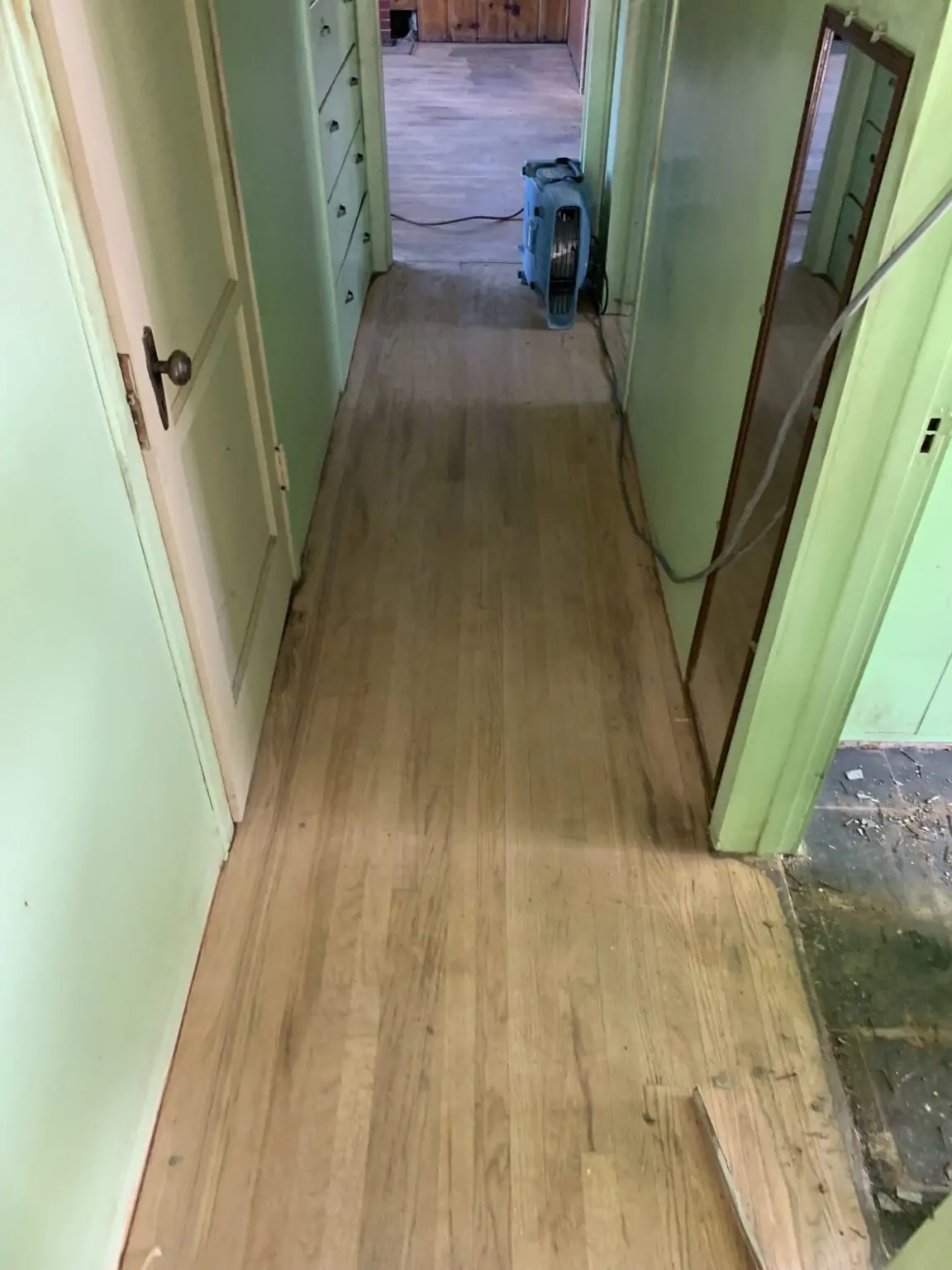
Urine can penetrate the seams between boards and reach both the hardwood and the subfloor underneath. In some cases we can treat the hardwood in place with a modified oxidizing treatment. In more severe cases, removal may be necessary to reach the contaminated subfloor below. Hardwood treatment is evaluated during the inspection and is not covered by the 5-Year Odor-Free Guarantee unless qualifying structural surfaces underneath are treated with the Odor Encapsulator System.
Around toilets and along floor lines, urine can be absorbed by drywall, baseboards, and cabinet bases. See our drywall urine odor removal page. Contaminated door jambs are removed as needed to treat the framing behind them. Cabinetry isn’t part of our scope — it’s documented in the report for your contractor.
Human urine odor is not limited to homes. We also get calls for repeated urine contamination in:
In garages and parking structures, repeated urination can soak into porous concrete, joints, wall bases, masonry, and other building materials. Surface washing may reduce the odor temporarily, but when contamination has penetrated below the surface, the smell can return — especially as the concrete warms or becomes damp.
We evaluate the affected material and recommend treatment based on the surface, the severity, and whether the area will remain exposed. Depending on the condition, treatment may include:
We treat the contaminated material — not just the smell in the air. Call 877-386-3677 for an inspection or site evaluation.
This is one of the most common reasons families call us. A parent has moved into care or passed away, and the house needs to be cleared, sold, or rented — and the odor is the one thing cleaning won’t fix.
It’s also where the most money gets wasted. New carpet or fresh paint goes in to get the house ready, the odor comes back, and the buyer or tenant notices it anyway. Treating the structure first means the new flooring and paint go over a sealed, odor-free base — and it only has to be done once.
The inspection gives you a clear scope and cost, which also helps when the property is part of an estate or a sale.
Human urine damage in a rental usually shows up at turnover — the carpet comes up and the subfloor is stained, or the bathroom floor and baseboards are saturated. The inspection documents the scope with an itemized estimate, which is also what you need for the deposit.
Treating the structure once is cheaper than re-flooring a unit twice.
Our 5-Year Odor-Free Guarantee applies to qualifying structural surfaces that are properly exposed, prepared, and treated with the Odor Encapsulator System. If the original urine odor returns from those treated surfaces due to the same contamination we remediated, we return and re-treat at no additional charge during the guarantee period.
It doesn’t cover new accidents, untreated areas, concealed materials the customer elected not to expose, work performed by others, or surfaces treated with the oxidizing treatment alone.
Once it has soaked into a subfloor, slab, or other porous material, the remediation is similar: locate it, remove what can’t be saved, prepare, dry, and seal.
Often, yes. The amount of material that can be treated versus removed depends on the severity and depth of contamination. It’s usually concentrated in specific areas — around the bed, a chair, or the bathroom.
Not before the subfloor is treated. New carpet over contaminated subfloor puts the odor right back into the room, and it’s the kind of thing buyers notice. Treat the structure first, then install.
In some cases, in place, with a modified oxidizing treatment. In more severe cases the hardwood has to come up so the subfloor can be treated. The inspection determines which. Hardwood treated in place isn’t covered by the 5-year guarantee.
Yes — residential garages, parking structures, and other concrete and masonry areas where repeated urination has soaked into the material.
No. We don’t mask the odor. We remove or seal the source.
Yes. We treat every job with professionalism and discretion.
Qualifying structural surfaces properly exposed, prepared, and treated with the Odor Encapsulator System, for five years, against the return of the original contamination we remediated.
Human urine odor that outlasts cleaning is in the structure. An inspection finds it and tells you what it will take to eliminate it — discreetly.
Serving California since 1989·5-Year Odor-Free Guarantee on qualifying treated surfaces
URINE DAMAGE INSPECTION
URINE DAMAGE INSPECTION