
Looking for a sealer that actually stops urine odor? Our proprietary Odor Encapsulator is applied only by our trained technicians — and backed by a 5-year written guarantee.
Serving California since 1989·5-Year Odor-Free Guarantee
We’ve been dealing with pet urine since 1989. We started in carpet cleaning, and worked across water damage and mold remediation — and in every one of those trades we kept running into the same problem: severe urine odor that no cleaning method could remove.
From 2000 to 2012 we specialized in pet odor and stain removal — using the same enzymes, cleaners, and deodorizers sold in stores today. And we watched the same homes call us back months later with the same smell in the same room.
In 2012 we moved into structural odor remediation and developed the Odor Encapsulator. It was built for one job: sealing urine odor at the source, in the structural materials of a home, to prevent the treated odor source from releasing back into the space.
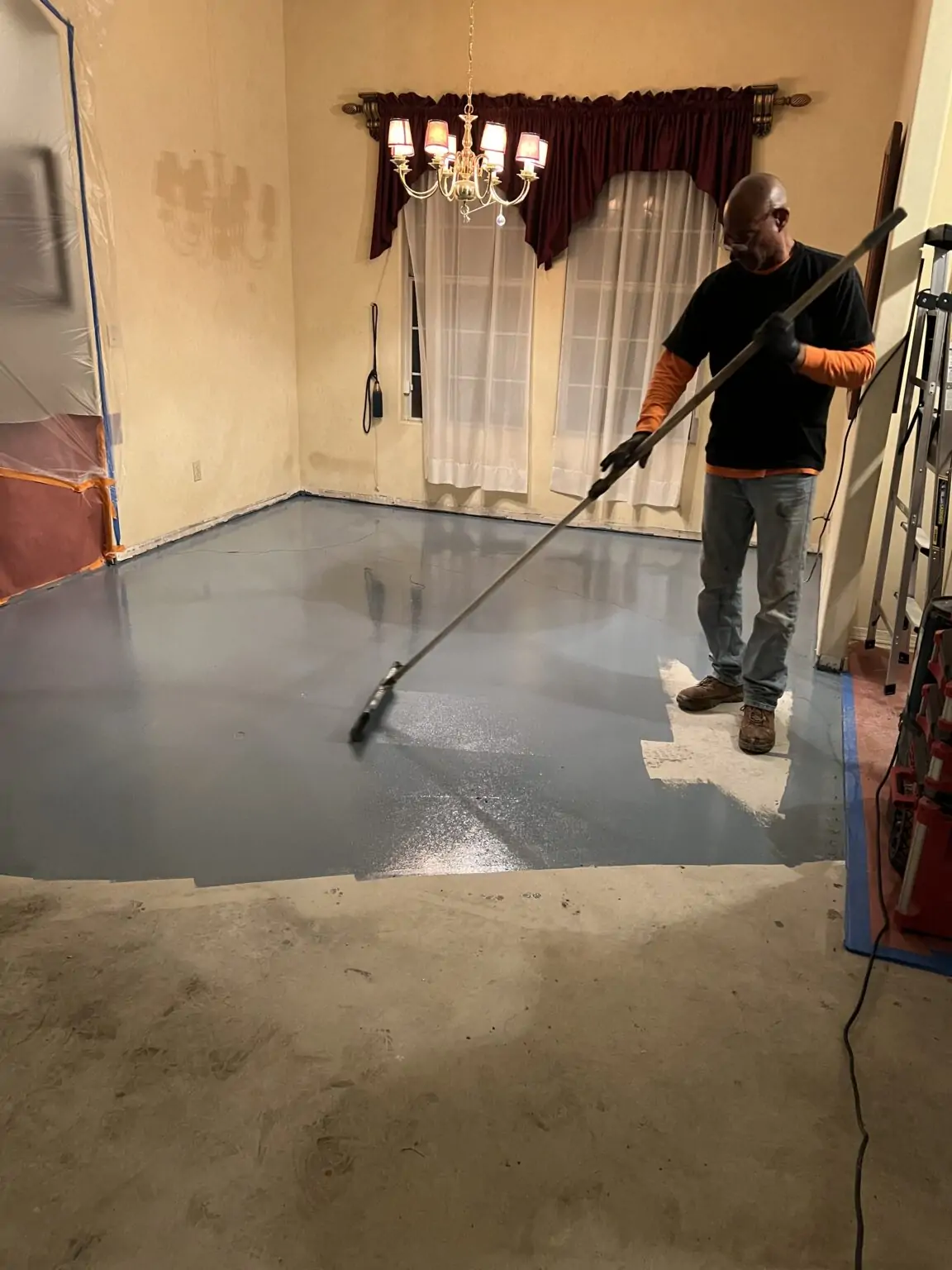
The Odor Encapsulator is a sealer. It’s applied to properly prepared structural surfaces and bonds to the substrate, encapsulating the odor source so it can’t release back into the room.
There’s no fragrance, perfume, or deodorizer in the process. Masking products cover a smell for a while and then fade. Encapsulation contains the source.
Cleaning removes what’s on the surface. The Odor Encapsulator is used after the surface has been cleaned, prepared, and dried — to seal what’s in the material underneath.
The sealer alone isn’t what makes the job work. Inspection, material removal, preparation, and dry-out come first. The encapsulator is the last step, and it only performs as well as the preparation underneath it.
The Odor Encapsulator is designed for hard surfaces:
It’s not used on carpet, pad, upholstery, or fabric. Soft materials that are saturated with urine are removed, not sealed. Ceramic, porcelain, and natural stone tile are treated with our soak treatment instead.
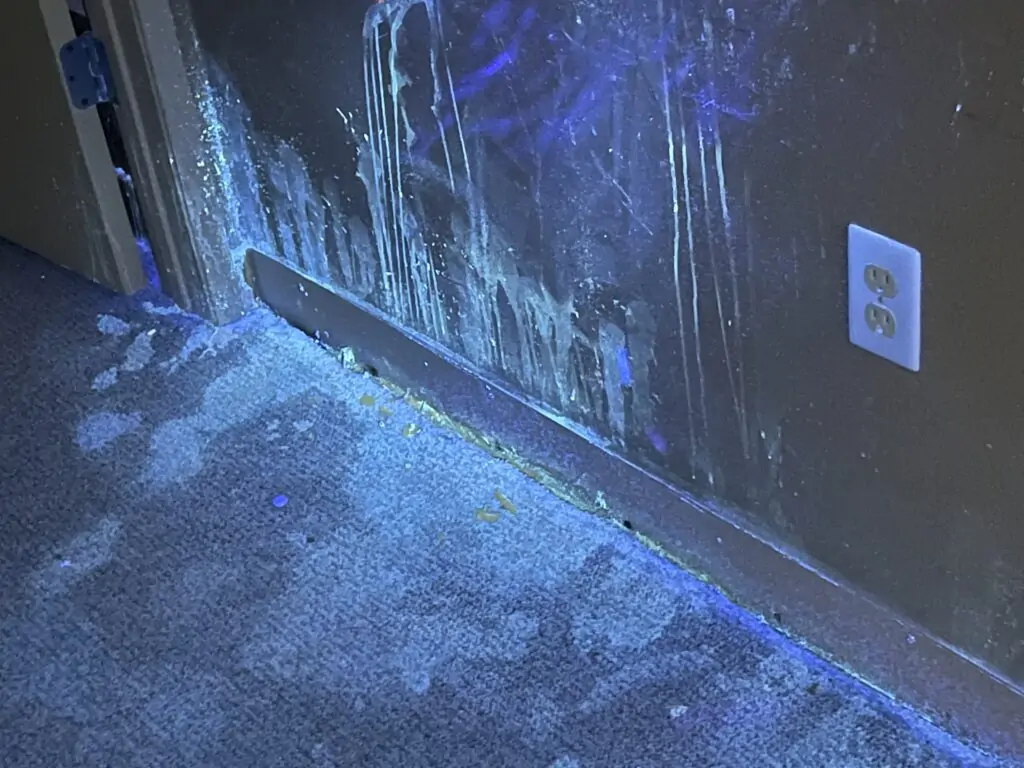
The inspection maps every affected surface before we recommend where the encapsulator goes.
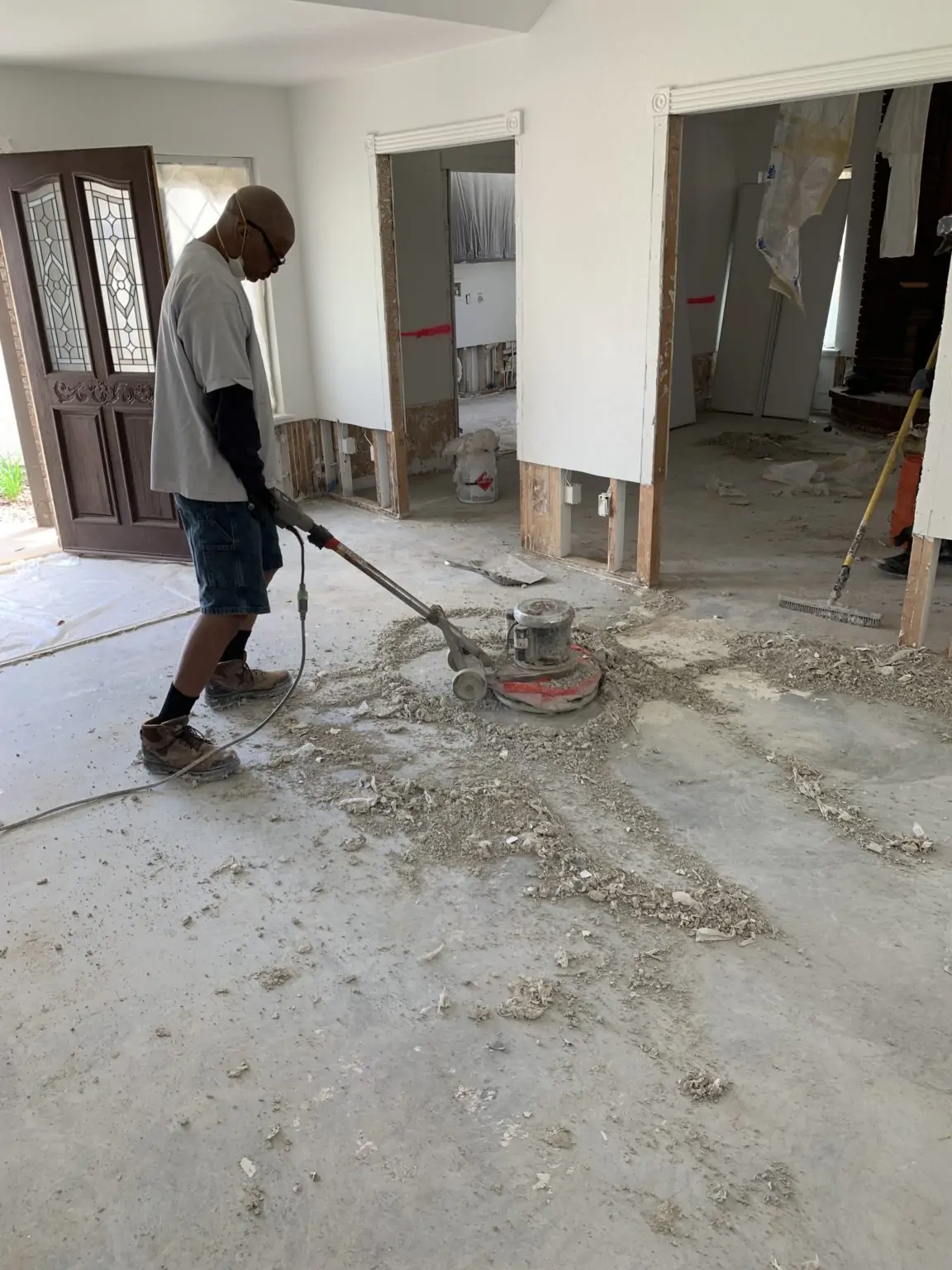
Any sealer — ours included — performs only as well as the surface it’s applied to. That’s why preparation is the majority of the work on every job.
Then the encapsulator goes on — one or two coats depending on the surface and the level of contamination.
We’re regularly called after someone has already applied a stain-blocking primer, shellac, or sealer over urine damage.
Those products are built to block stains on surfaces that are ready for them, and on the right surface they do exactly that. A urine-contaminated subfloor or slab usually isn’t that surface. It may still be holding moisture. It may be carrying residue, old finish, or overspray. And the contamination may run deeper — into the plywood core, a panel seam, or the framing below — than anything applied on top can reach.
Right product, wrong surface condition. The difference with our system isn’t just the sealer. It’s that nothing gets applied until the surface has been inspected, prepared, and dried.
We don’t sell the Odor Encapsulator to the public, and we don’t supply it to other contractors. It’s applied only by our trained technicians.
That isn’t about keeping a secret. It’s about results. The product works because of how the surface is prepared and how it’s applied — and a guarantee only means something if the same people who inspect the job are the ones who prepare and treat it. Keeping application in-house is what lets us put a 5-year written guarantee behind the work.
Our 5-Year Odor-Free Guarantee applies to qualifying structural surfaces that are properly exposed, prepared, and treated with the Odor Encapsulator System, based on the recommendations from the Pet Odor Inspection.
If the original pet urine odor returns from those treated surfaces due to the same contamination we remediated, we return and re-treat at no additional charge during the guarantee period.
It doesn’t cover new pet accidents, untreated areas, concealed materials the customer elected not to expose, or work performed by others.
The guarantee follows the inspection. The field estimator identifies which surfaces need treatment; the surfaces we treat according to that inspection are the surfaces we guarantee.
Job length depends on the size of the area, how extensive the contamination is, and whether wet urine has to be dried out first.
The inspection gives you a timeline along with the itemized estimate.
The odor is usually gone within 24 hours after treatment.
Once the encapsulator has fully cured, the treated surfaces are ready for the next trade. Subfloors are ready for new flooring. Concrete is ready for flooring or, in a garage, a finish coat. Treated drywall can be finished by your painter or contractor.
Cure time varies with the surface, the number of coats, temperature, humidity, and job conditions. We provide the appropriate installation timing at the completion of the job.
We’re an odor remediation company. Our work ends with the affected structural surfaces treated and sealed; your contractor or flooring installer takes it from there.
After carpet and pad removal, coating removal, sanding, and dry-out, the encapsulator seals the plywood before new flooring goes down. When contamination has reached the framing, the joists and sill plate are sealed too.
After grinding off failed coatings and treating cracks and joints, the encapsulator seals the slab. Garage floors can take a finish coat afterward.
Where drywall can be saved, the surface is prepared and treated with the Odor Encapsulator. Once the treatment has fully cured, the wall can be finished by the customer’s painter or contractor. Where drywall has to come out, the framing behind it is dried and sealed before the wall is rebuilt by your contractor.
Whether it’s cat spray on walls or dog urine soaked through a subfloor — see our dog urine odor removal service — the encapsulator is the final step after the contamination has been located, removed where necessary, and dried.
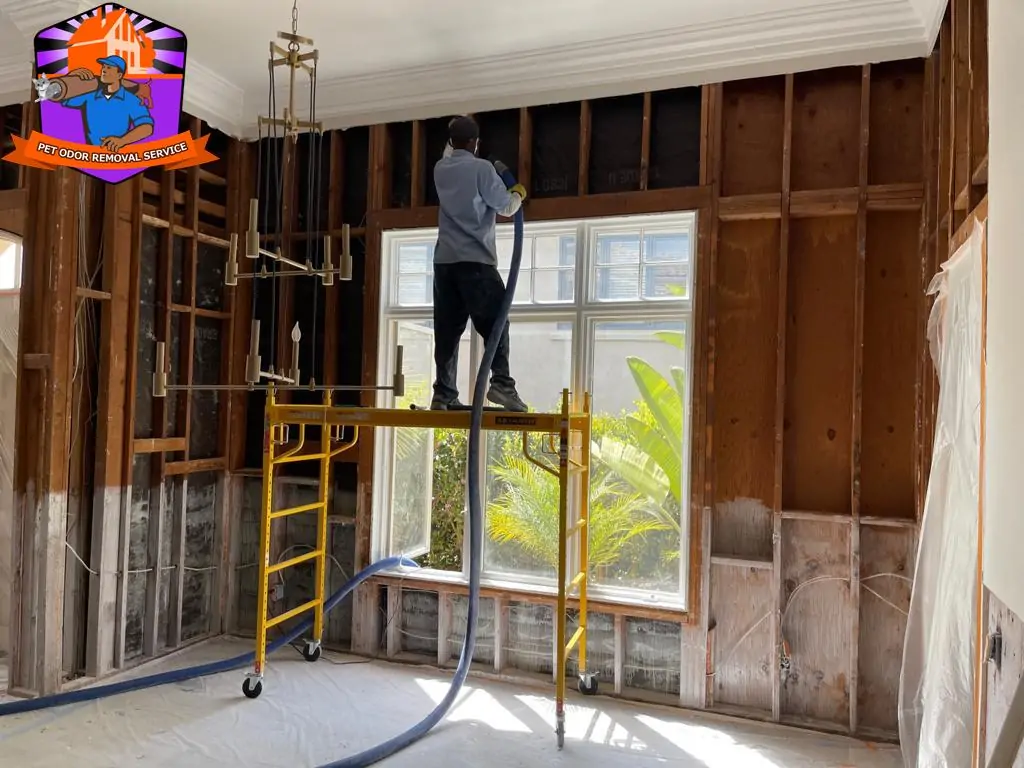
No. It isn’t sold to the public or to other contractors. It’s applied only by our trained technicians, which is what allows us to guarantee the results.
Hard surfaces — wood and plywood subfloors, framing, concrete, drywall, plaster, and clay and concrete pavers. Carpet, pad, and fabric are removed rather than sealed. Ceramic, porcelain, and natural stone tile get our soak treatment instead. Contaminated door jambs are removed as needed so the framing behind them can be sealed. Doors and cabinetry aren’t treated — they’re documented in the report for your contractor.
No. There’s no fragrance or deodorizer involved. It encapsulates the odor source rather than masking the smell.
Stain-blocking primers are designed to block stains on prepared surfaces. Our system prepares and dries the surface first, removes previous coatings, and treats the actual source — then seals it. The preparation is as much a part of the result as the sealer.
One or two, depending on the surface and the level of contamination.
Smaller jobs typically take one to two days. Larger or more severe jobs can take one to two weeks. The inspection gives you a timeline.
Usually within 24 hours after treatment.
Yes, after the Odor Encapsulator has fully cured. Cure time varies with the surface, number of coats, temperature, humidity, and job conditions — we give you the installation timing when the job is complete.
Yes. Once the treatment has fully cured, the wall can be finished by your painter or contractor.
Qualifying structural surfaces properly exposed, prepared, and treated with the Odor Encapsulator System, based on the Pet Odor Inspection, for five years, against the return of the original contamination we remediated.
The encapsulator only works on the surfaces that are actually contaminated — and the inspection is how we find them. Every job starts there.
Serving California since 1989·5-Year Odor-Free Guarantee on treated surfaces
URINE DAMAGE INSPECTION