Still smell cat urine after cleaning? The source is in the structure. P.O.R.S. locates hidden contamination in drywall, framing, and wall cavities, then treats it at the source.
Serving California since 1989·5-Year Odor-Free Guarantee
Cat urine contains urea, uric acid, ammonia, and proteins. The uric acid forms crystals that bind tightly to porous materials — drywall, wood framing, insulation. Those crystals are hydrophilic: they reactivate and release odor whenever they meet moisture or humidity.
That's why the smell comes back after cleaning. Surface treatment handles what you can reach. It does nothing about what has soaked into the wall.
This is the most common misconception we encounter.
When cats repeatedly urinate at the base of a wall, urine wicks upward through the drywall from a urine-contaminated subfloor — often without leaving any visible stain on the surface. The wall looks fine. The odor says otherwise.
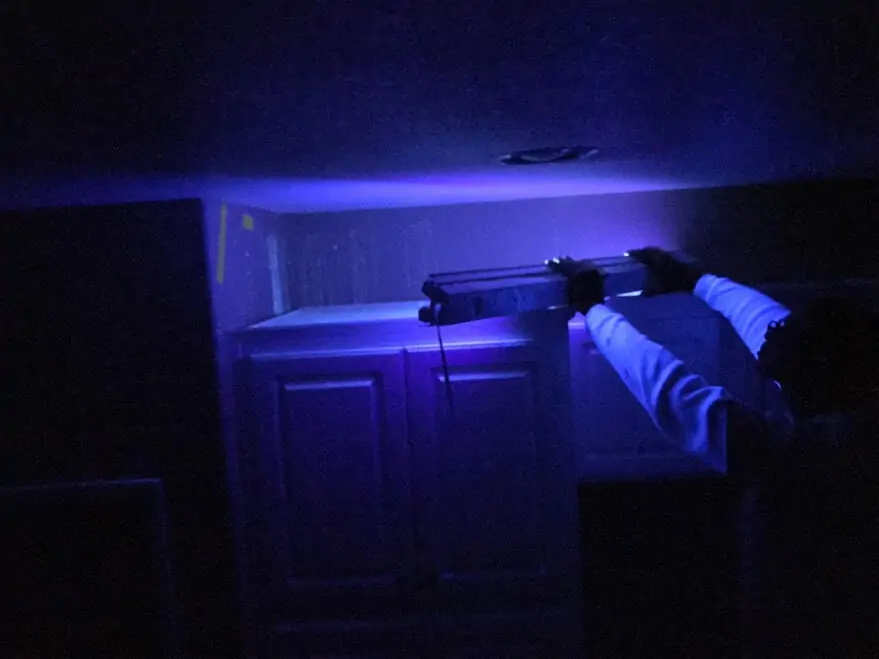
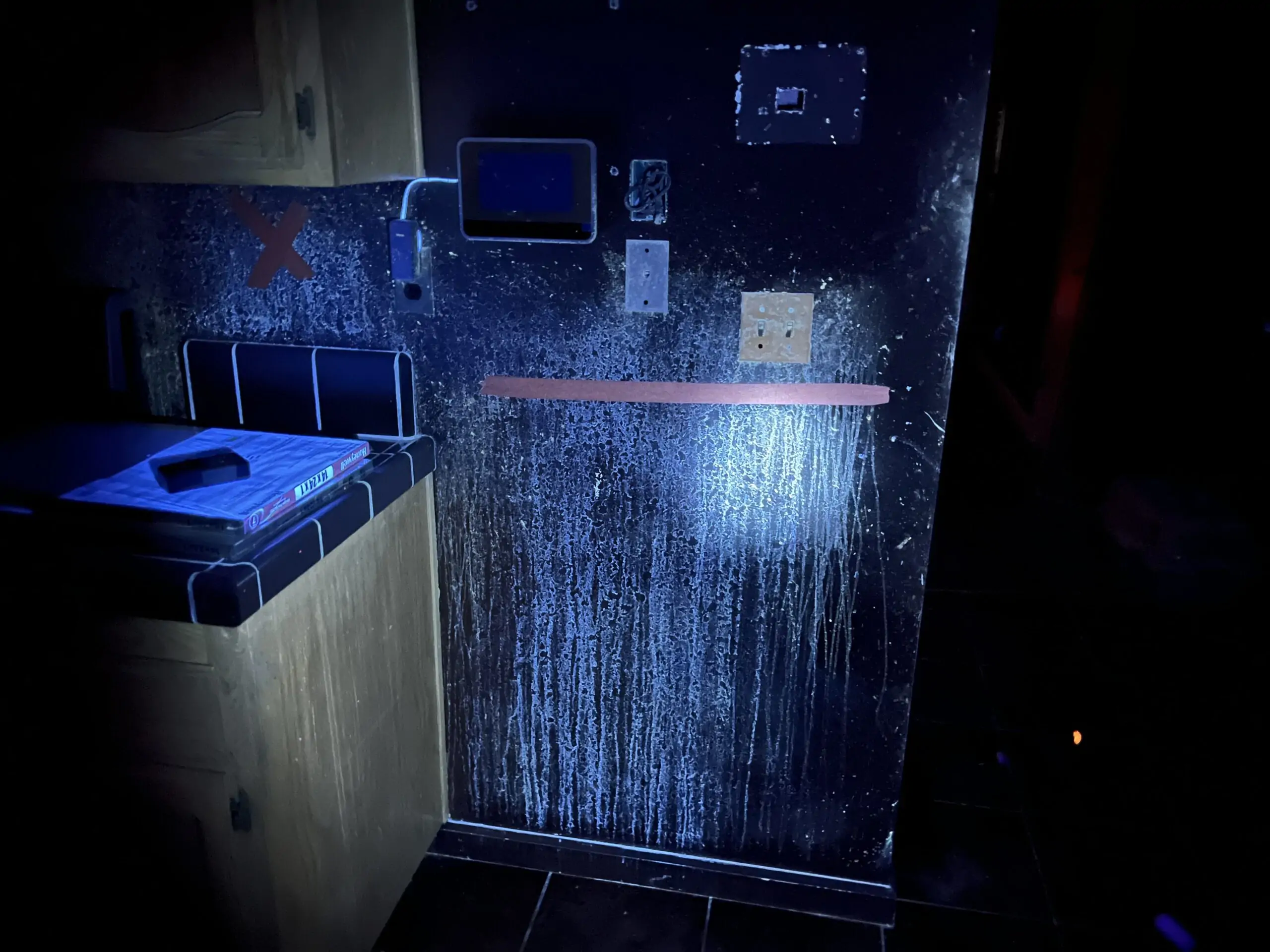
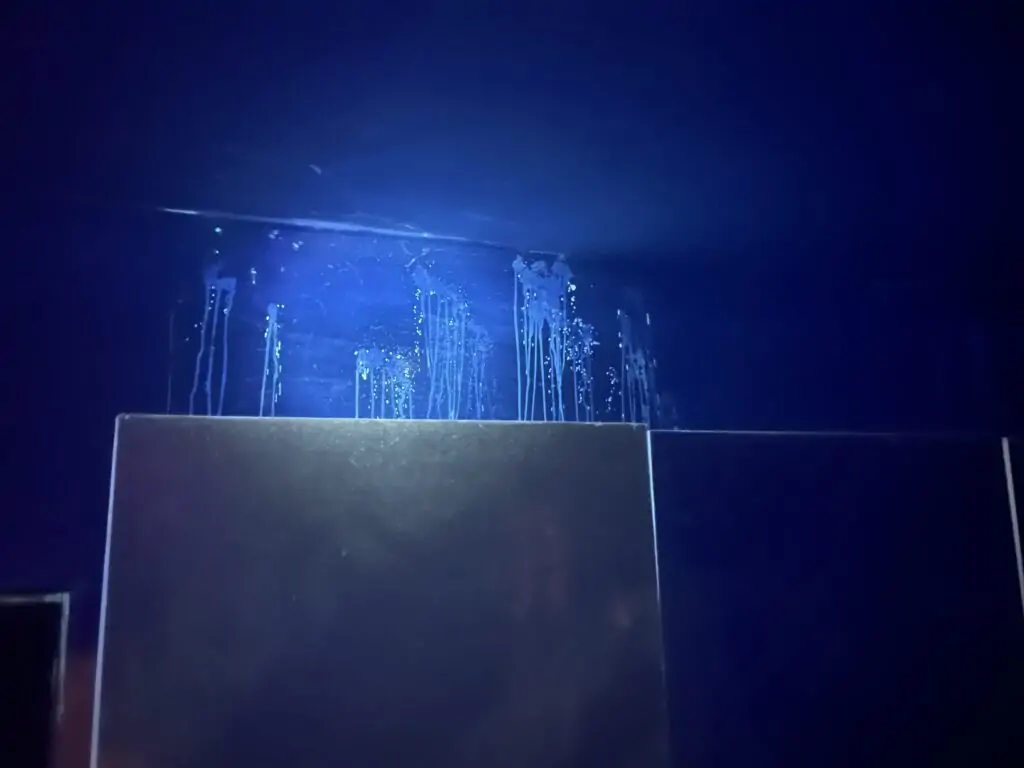
Cat spray behaves differently. Most spray is deposited roughly 12 to 18 inches above the floor, though some cats spray higher. Repeated spraying leaves characteristic vertical staining on drywall, doors, baseboards, and cabinets that shows up readily under UV black light. Dogs leave a similar marking pattern along baseboards and vertical surfaces, which we address using the same dog urine odor removal process.
That distinction matters, because it tells us where the contamination is actually coming from — inside the wall assembly, from the floor below, or from surface spraying. And that determines the least invasive way to eliminate it.
We've found urine 4 to 8 feet up walls, on top of kitchen cabinets, around baseboards and fireplaces, and inside heating and air conditioning ducts. Where it looks like it is and where it actually is are frequently two different things.
Most people have already tried several things before they call us — enzyme cleaners, vinegar, bleach, odor-neutralizing sprays, repainting, sometimes new flooring.
These products can work on genuinely surface-level contamination. The problem is what they can't reach.
Need direct contact with the urine contamination to work. When urine has penetrated beyond the drywall surface, behind baseboards, or into framing and wall cavities, a surface application may not reach the source. Heavy or repeated liquid application can also introduce additional moisture into drywall and surrounding materials, which can complicate remediation.
Including sealing primers — cover the odor rather than remove the source. The contamination is still behind the paint, and it reactivates with humidity.
Replacing the flooring without treating the wall base leaves the source in place. New flooring installed over or beside contaminated drywall and framing means the odor returns.
The pattern is consistent: if the odor came back, the source was never reached. That's a structural problem, and it needs to be located before it can be treated.
That's what the inspection determines — before any work is recommended.
Our goal is to preserve as much of the existing structure as possible while eliminating the odor. That's only possible if we know exactly what we're dealing with first.
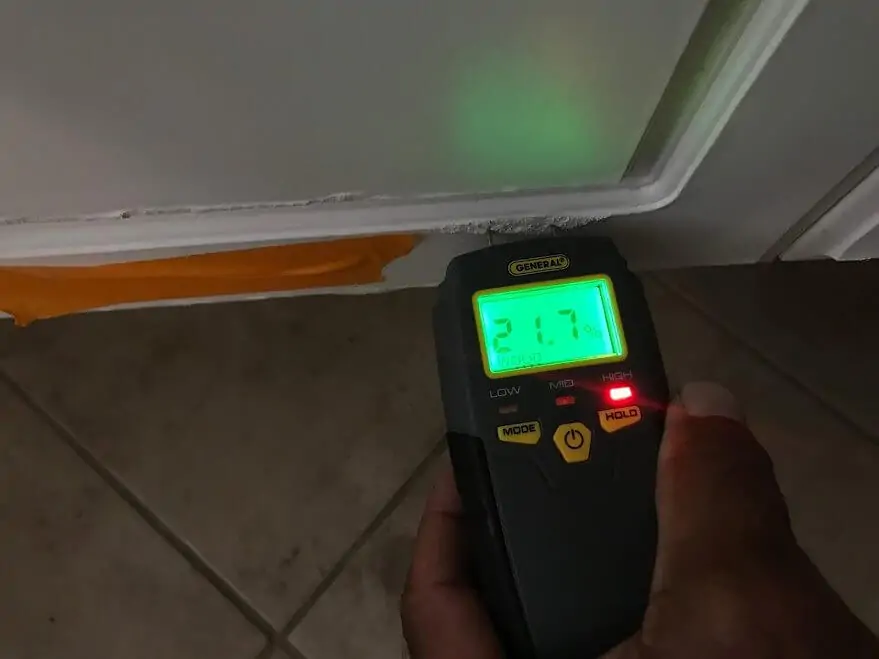
A comprehensive pet odor inspection may include:
These are important conditions we regularly find when contamination has traveled beyond the visible drywall surface:
Every recommendation we make comes from what the inspection actually finds.
In homes built on a concrete slab foundation, we also check where the wall meets the slab. If contamination has reached the concrete itself, that's treated separately as part of our concrete urine odor removal service.
Homeowners often assume that once a cat has urinated or sprayed on a wall, the drywall has to come out. That simply isn't true.
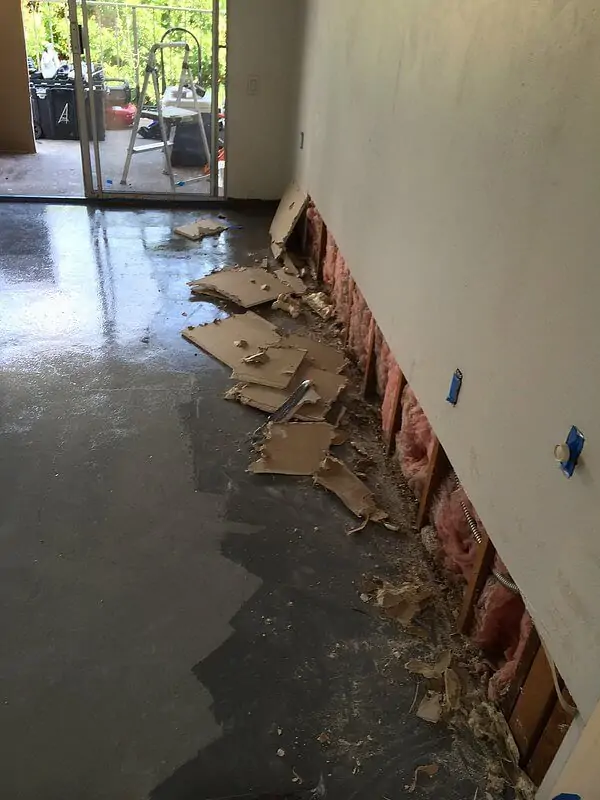
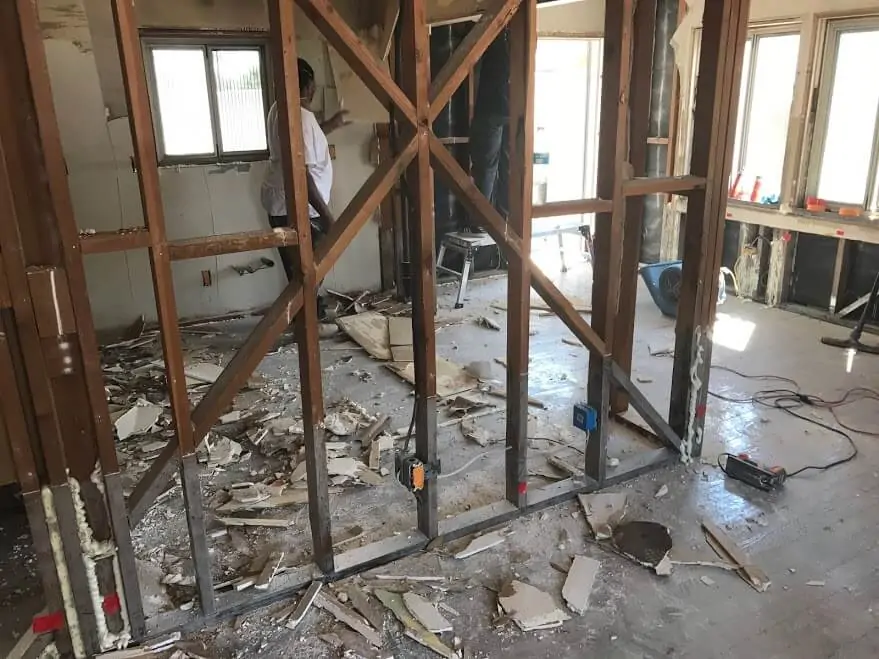
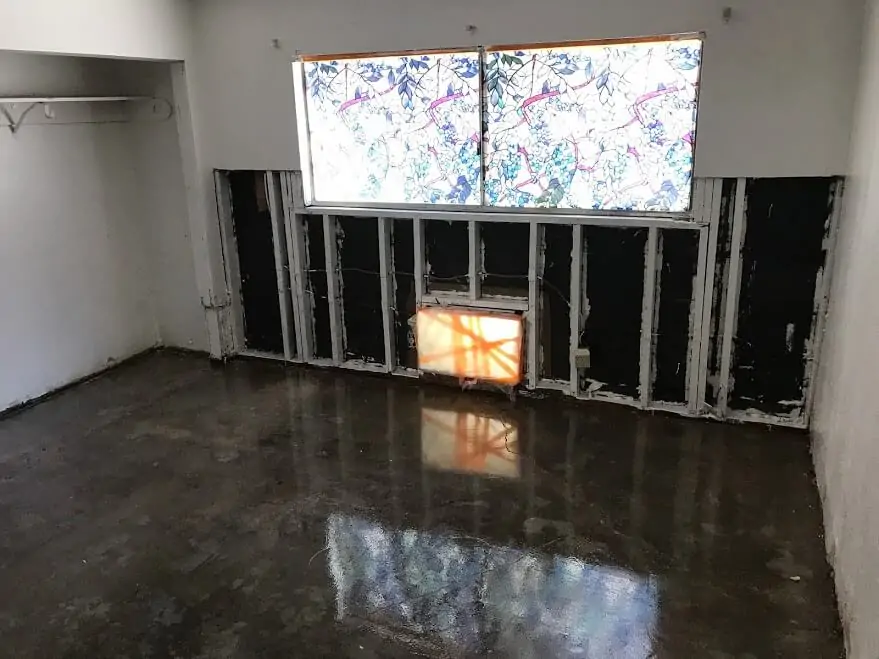
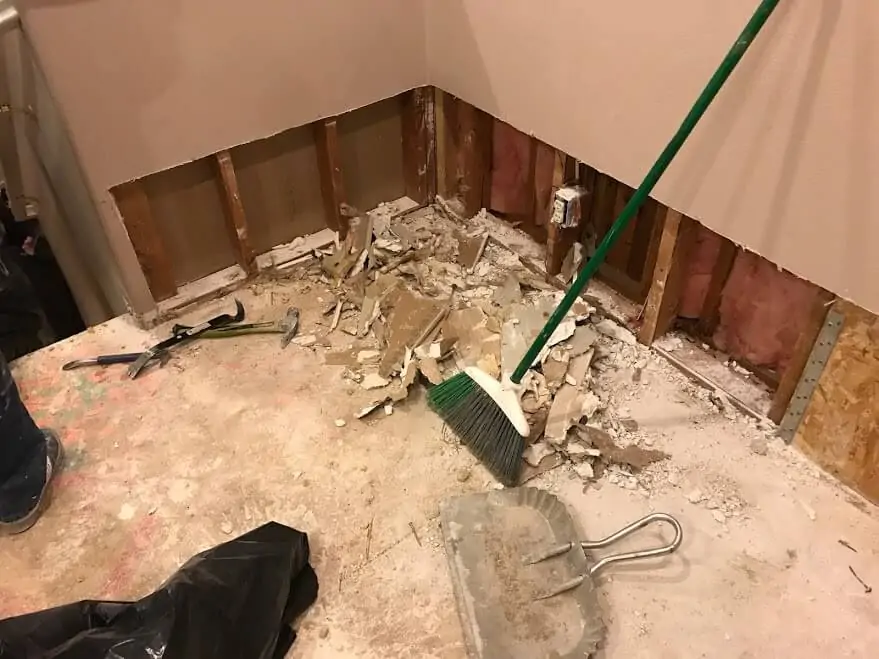
In many cases only the lower section of drywall needs to be removed — enough to expose contaminated sill plates and wall studs for treatment. In other cases the drywall can be preserved entirely and only the structural framing requires work.
We do not recommend removing drywall unless the inspection indicates it's necessary to eliminate the odor. We recommend the least invasive solution that will work, not the most expensive one.
We prepare and seal the affected surfaces with our Odor Encapsulator System.
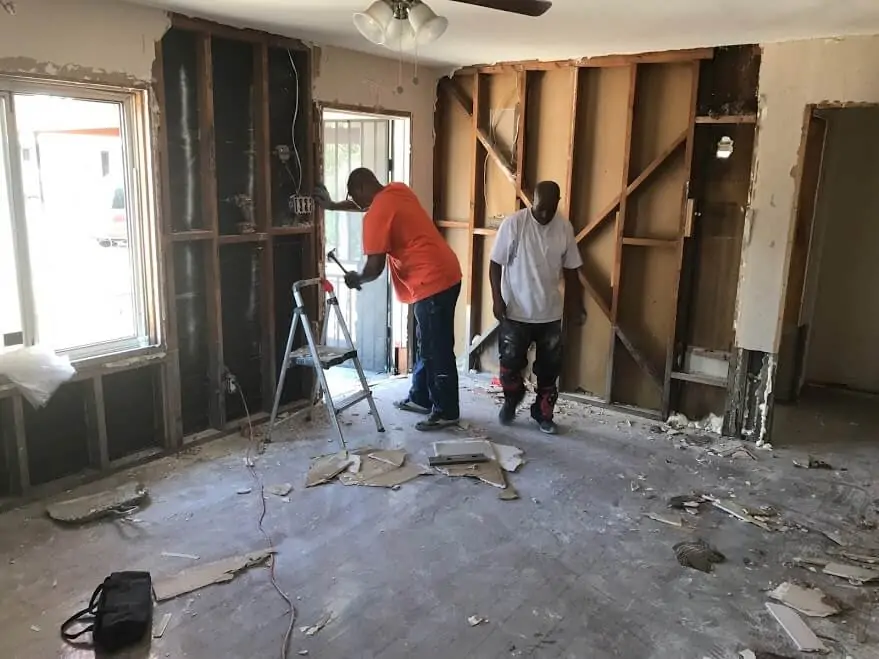
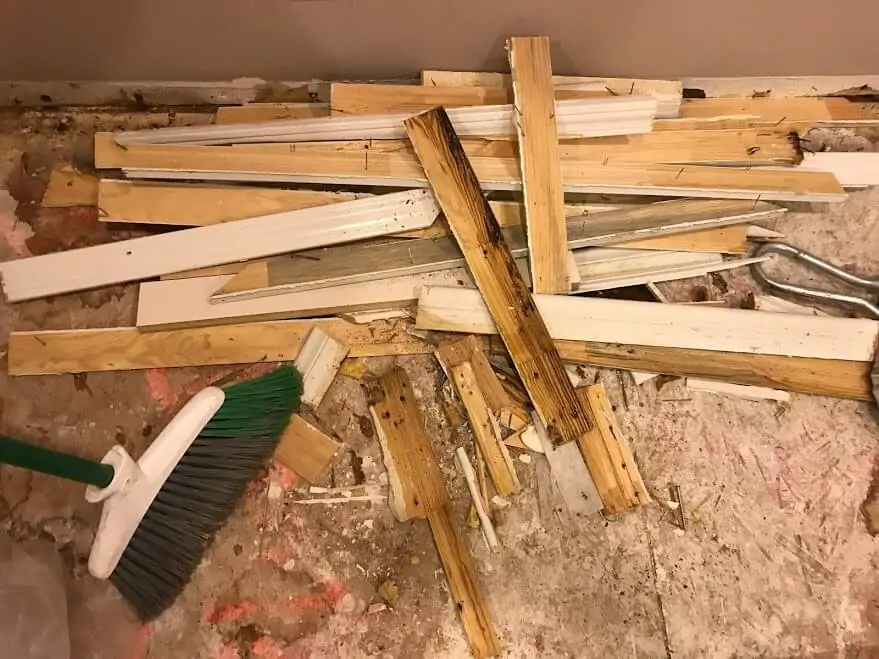
We remove the damaged drywall and insulation, then examine the wall studs and sill plate for odor and moisture. Damp framing is dried with specialized equipment. Once dry, we clean and seal the studs and sill plate with our Odor Encapsulator System.
That leaves the structure treated, sealed, and ready for your contractor.
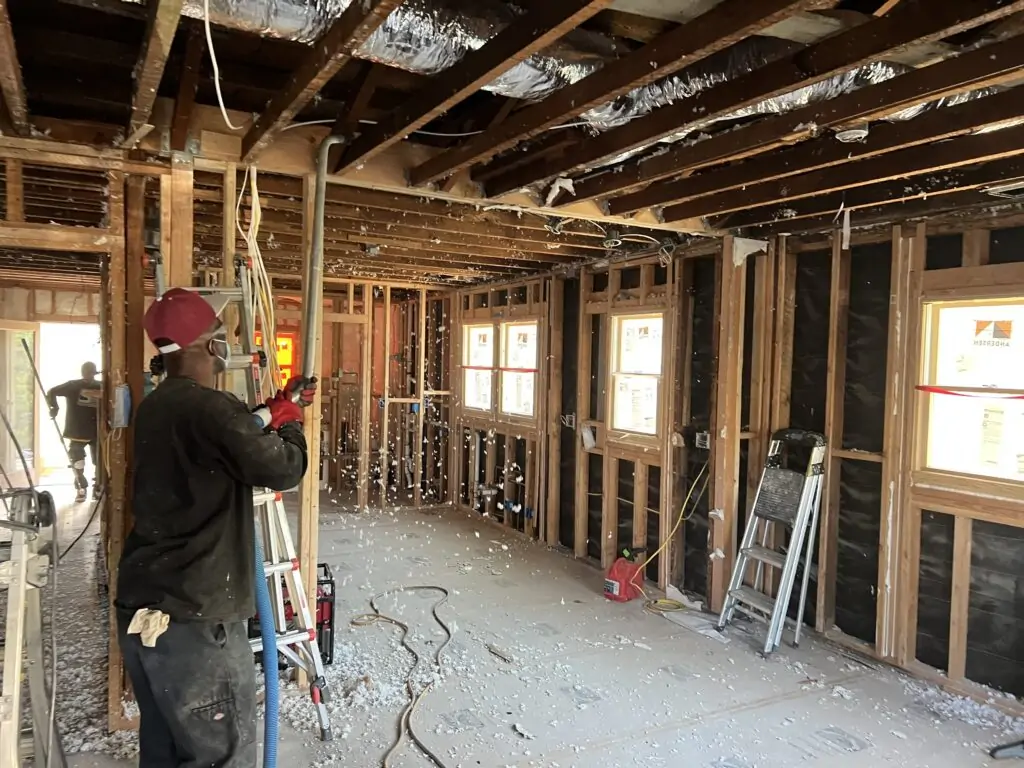
To be clear about scope: we are an odor remediation company, not a general contractor. Our work ends once the odor source has been eliminated and the exposed structural surfaces are treated. We do not install new drywall — your contractor handles reconstruction.
Our 5-Year Odor-Free Guarantee applies to qualifying structural surfaces that are properly exposed, prepared, and treated with the Odor Encapsulator System. If the original pet urine odor returns from those treated surfaces due to the same contamination we remediated, we return and re-treat the affected areas at no additional charge during the five-year guarantee period.
The guarantee does not cover new pet accidents, untreated areas, concealed structural materials the customer elected not to expose, or damage caused by remodeling, repairs, or alterations performed by others. Because the guarantee is tied to the treated structural surfaces, we guarantee only the areas that have been properly exposed, prepared, and encapsulated.
If the odor survived cleaning, it's in the structure. That's what we do.
Yes. Urine wicking up from the floor often leaves no visible surface stain. A UV inspection combined with odor detection tells us whether the wall is contaminated regardless of what's visible.
Enzyme products have to reach the urine crystals to work. Once urine has soaked into the gypsum core, run behind the baseboard, or reached the framing, a surface application can't get to it. Heavy application can also saturate the drywall to the point where it has to be removed.
Not unless the inspection says it's necessary. Many walls can be preserved. Where removal is required, it's often only the lower section — enough to expose and treat the sill plate and studs.
Yes. Urine runs down behind baseboards and into wall cavities, reaching studs, sill plates, and insulation. Surface cleaning never touches it.
Yes. When we open a wall, we inspect the studs and sill plate, dry them if they're damp, and seal them with our Odor Encapsulator System.
No. We remove contaminated material and treat the structure. Your contractor handles the rebuild.
Structural surfaces treated with our Odor Encapsulator System, for five years, against return of the original contamination we remediated.
Persistent cat urine odor in drywall doesn't resolve on its own, and it doesn't respond to surface cleaning. An inspection tells you exactly where the contamination is and what it will take to eliminate it.
Serving California since 1989·5-Year Odor-Free Guarantee on treated surfaces
REMOVE CAT URINE ON DRYWALL
REMOVE CAT URINE DAMAGED INSULATION BEHIND DRYWALL
SEAL URINE ODOR STAINED STUDS BEHIND DRYWALL