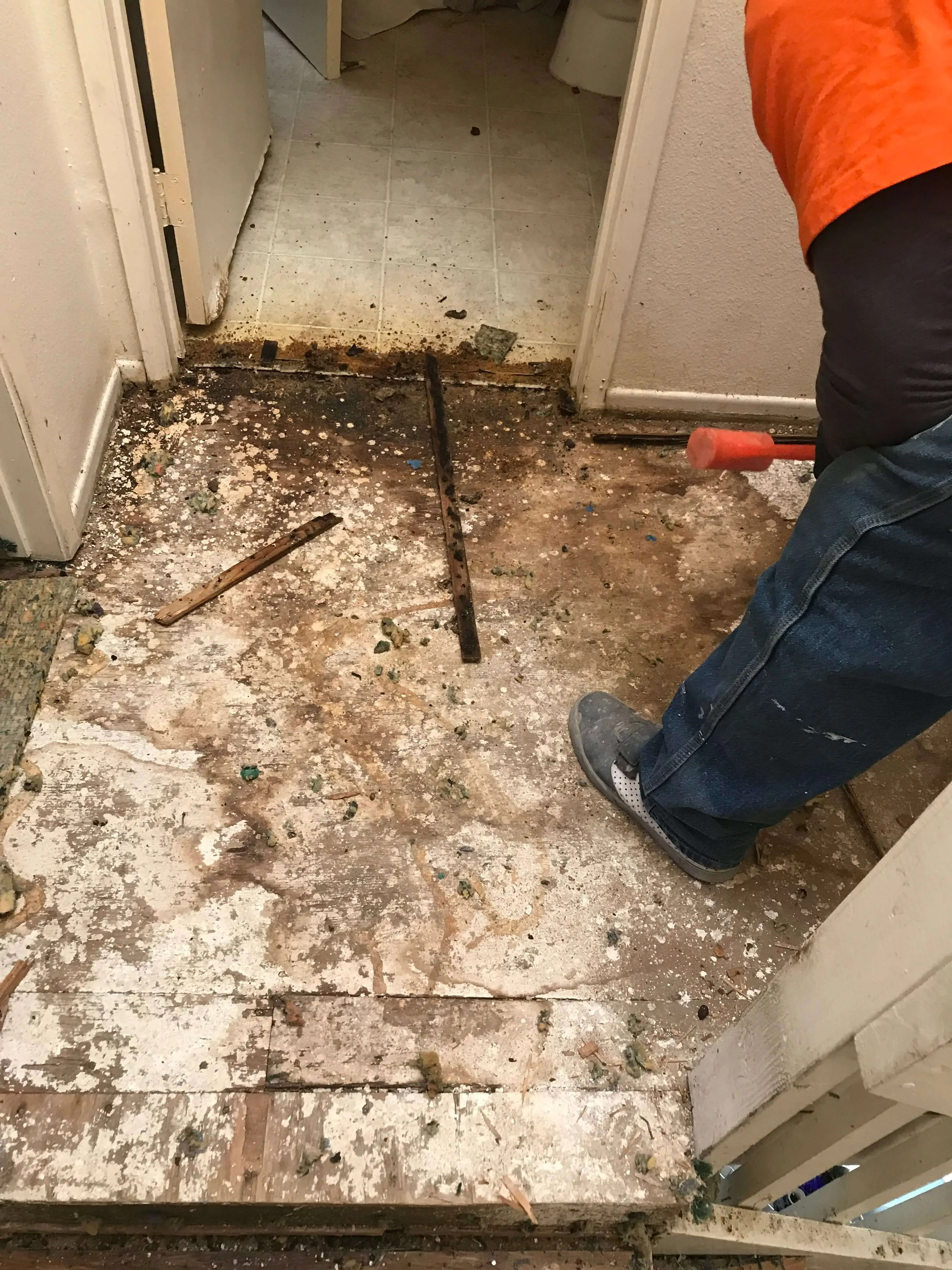
Already sealed the subfloor and it still smells? We remove the failed coating, prep the wood properly, and seal it with our Odor Encapsulator.
Serving California since 1989·5-Year Odor-Free Guarantee
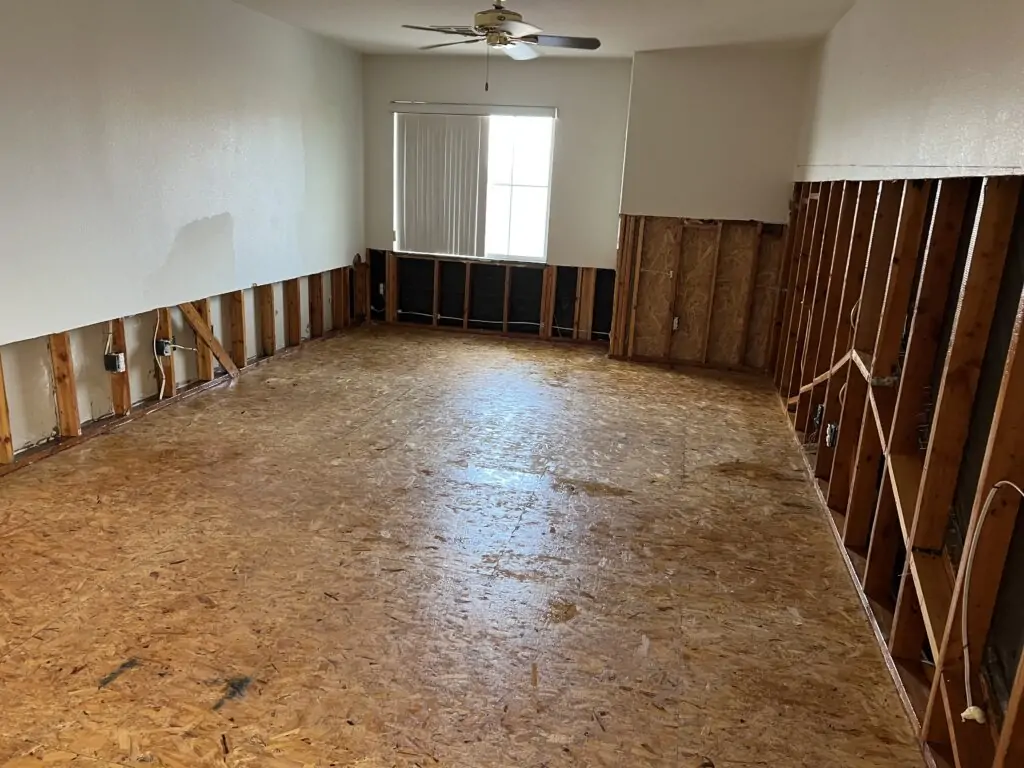
A large share of the subfloors we work on have already been treated by somebody.
Cleaned. Primed. Painted. Sealed with a product bought for the job. Sometimes treated by a professional cleaning company. The carpet went back down, or the new floor went in, and within weeks or months the smell returned.
That’s the call we get most often on subfloors — not “what should I do,” but “I already did something and it didn’t hold.”
The reason is almost always the same, and it isn’t the product.
If any of these sound familiar, the odor is coming from below the finished floor:
Several of these together usually mean contamination in the subfloor — and sometimes in the framing underneath it.
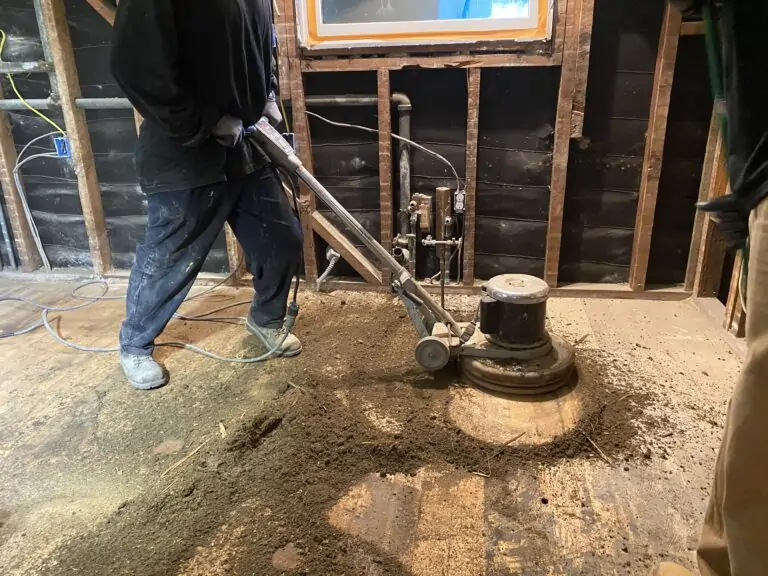
Sealers, primers, and stain blockers do what they’re designed to do — on a surface that’s ready for them. A urine-saturated subfloor usually isn’t.
Any coating applied over a subfloor still holding moisture traps that moisture beneath the film. The coating can’t bond properly, and the contamination underneath keeps releasing.
Coatings need clean, open wood fiber to grip. Applied over a surface still carrying urine residue, old finish, or overspray, the bond is to the contamination — not to the wood.
Urine that soaked through carpet pad into the plywood core, down a tongue-and-groove seam, or past the subfloor into the framing below isn’t reached by anything applied to the top surface.
Right product, wrong surface condition. That’s the pattern — and it’s why the fix isn’t a better sealer. It’s proper preparation before any sealer goes down.
When we open up a subfloor that was already treated, the same patterns show up again and again:
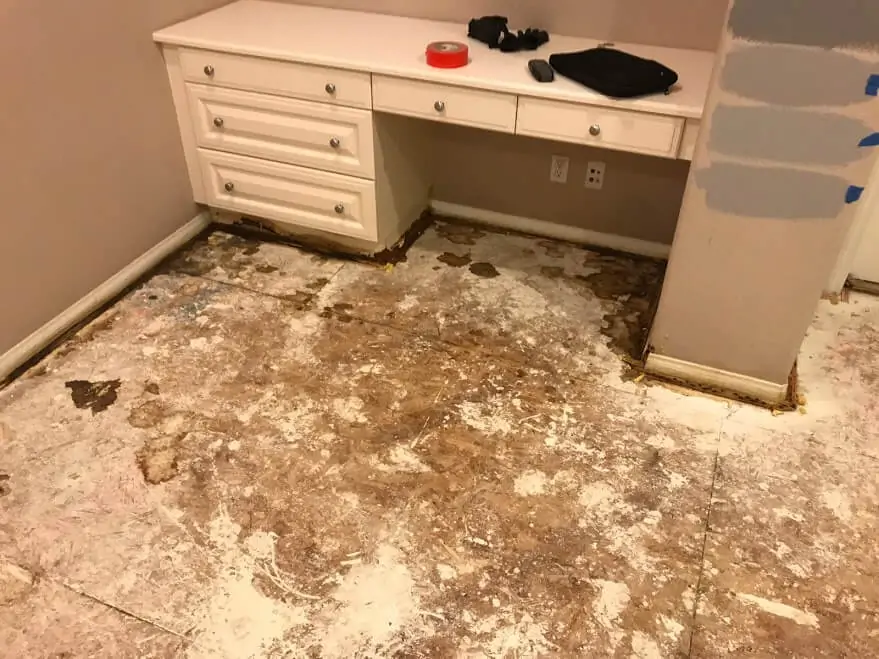
Staining shows where the heaviest urine was. It doesn’t show the full extent. UV black light routinely reveals contamination well beyond the stained areas — and those untreated sections keep releasing odor through and around the coated patches.
The subfloor looked dry on the surface but was still holding moisture. The coating trapped it, and the odor kept coming.
Pad residue, adhesive, old paint, and overspray were left on the wood and coated over. The sealer bonded to the residue instead of the subfloor.
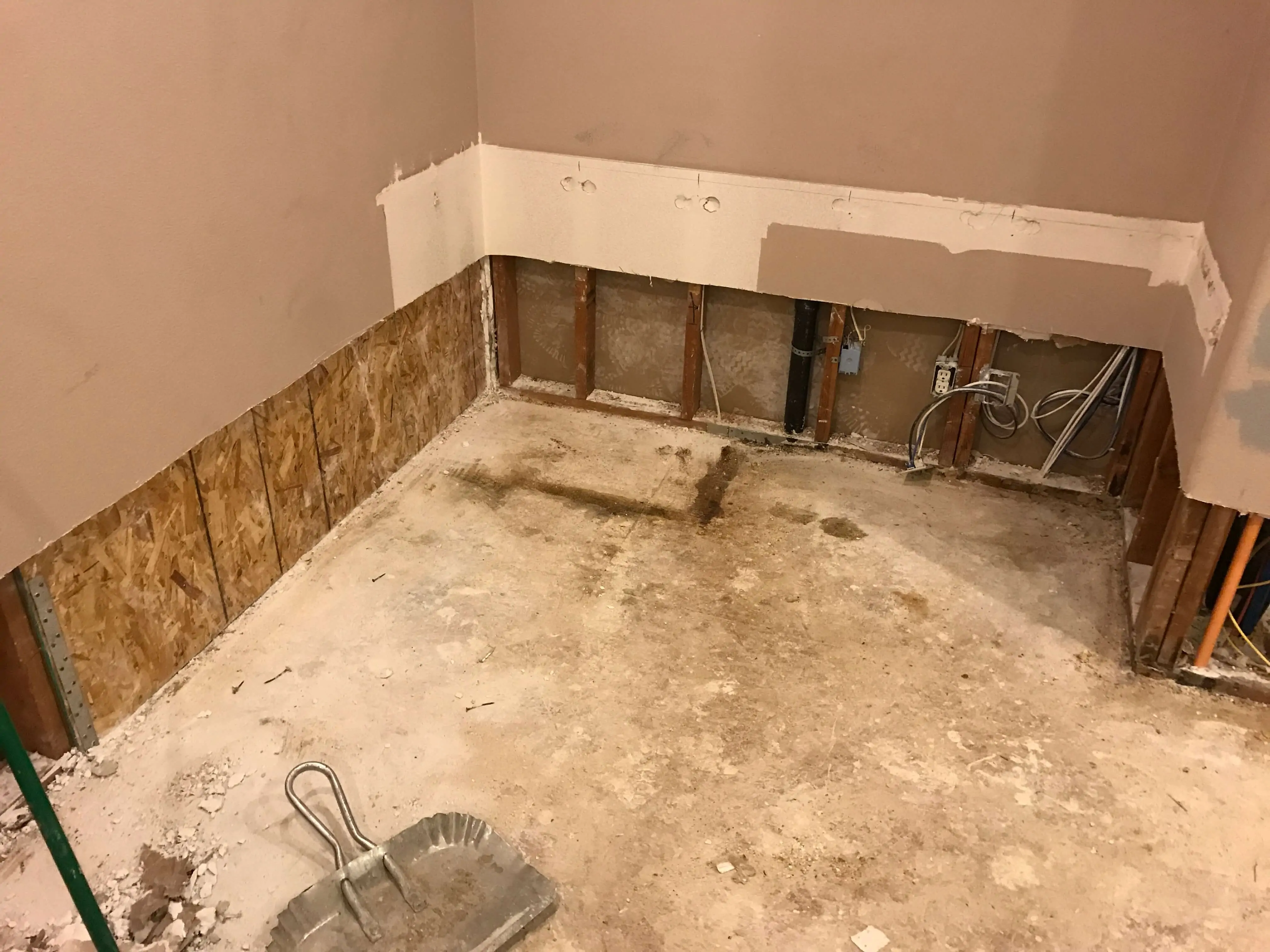
Urine wicks into panel seams, along the tack strip line, and under the baseboard at the wall. Those are the hardest areas to reach with a roller and the most common places a previous treatment left open.
The subfloor was sealed, but the urine had already reached the joists and sill plate underneath. Sealing the top of the plywood didn’t touch it.
Every one of these is fixable. None of them are fixed by applying another coat over the top.
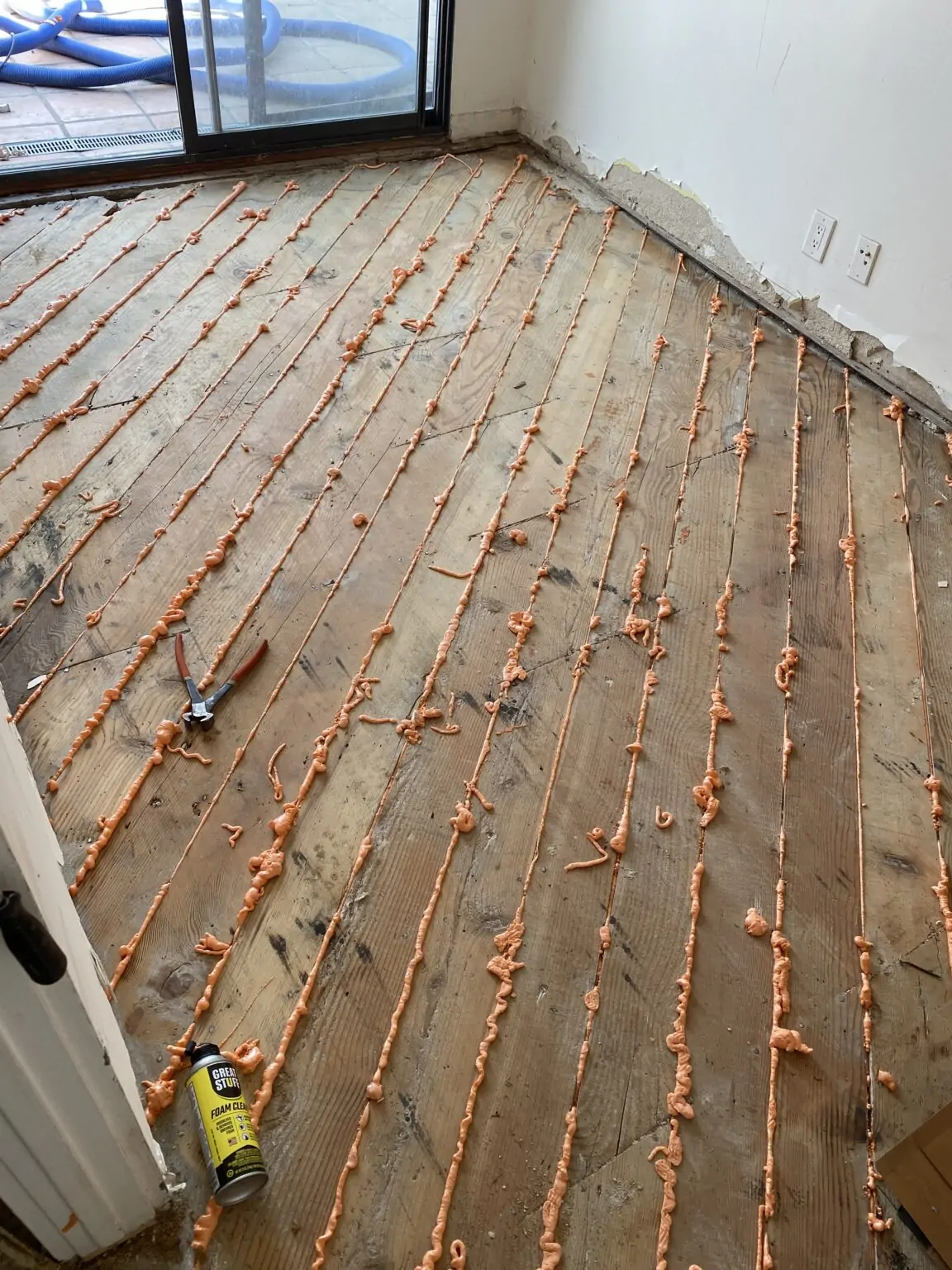
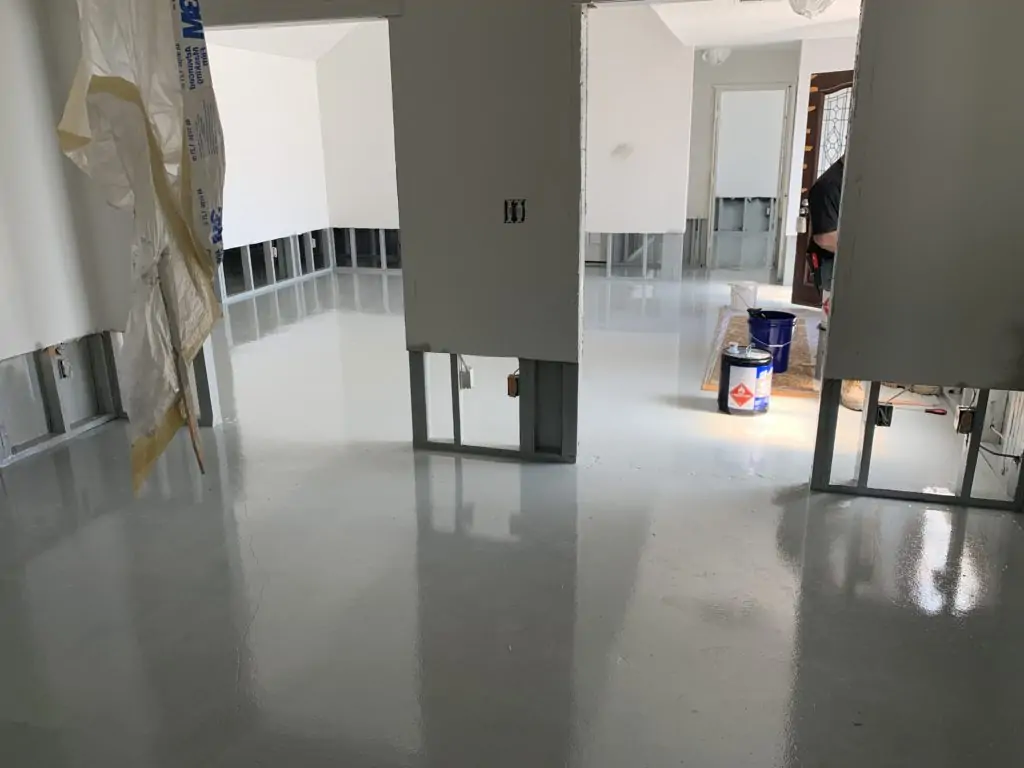
Our professional pet odor inspection tells you before anyone starts removing material.
Most of what we do on a subfloor happens before the sealer is opened.
Urine doesn’t stop at the plywood.
Once it soaks through, it reaches the framing underneath — floor joists, sill plates, wall studs, and insulation. On repeat-accident areas and long-term contamination — the same pattern we see with dog urine odor removal in high-traffic marking spots — that’s where the odor is actually living, and treating the subfloor surface alone won’t reach it.
Signs the contamination went deeper:
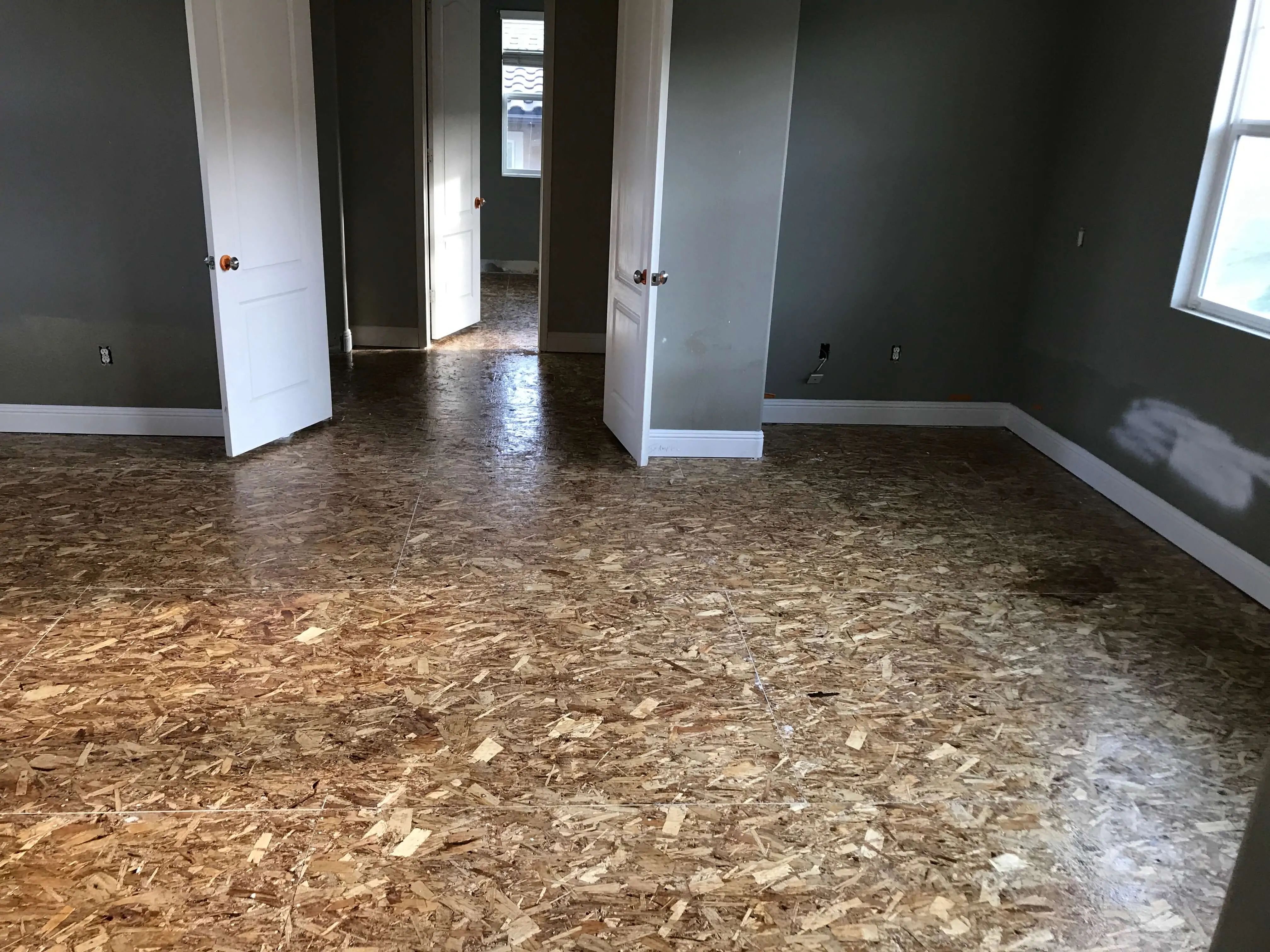
When we remove subfloor. Sometimes a section is saturated past the point of treatment. When that’s the case we remove it — not as the default, but to get access to the wet, contaminated framing underneath. Once the framing is exposed, it’s dried, prepared, and treated directly. Surface treatment on top of the subfloor will not reach contamination that has penetrated into the structure.
Removal is a significant job and we don’t recommend it unless the inspection shows it’s necessary. But on a subfloor that’s already failed one treatment, it’s often what was missed the first time.
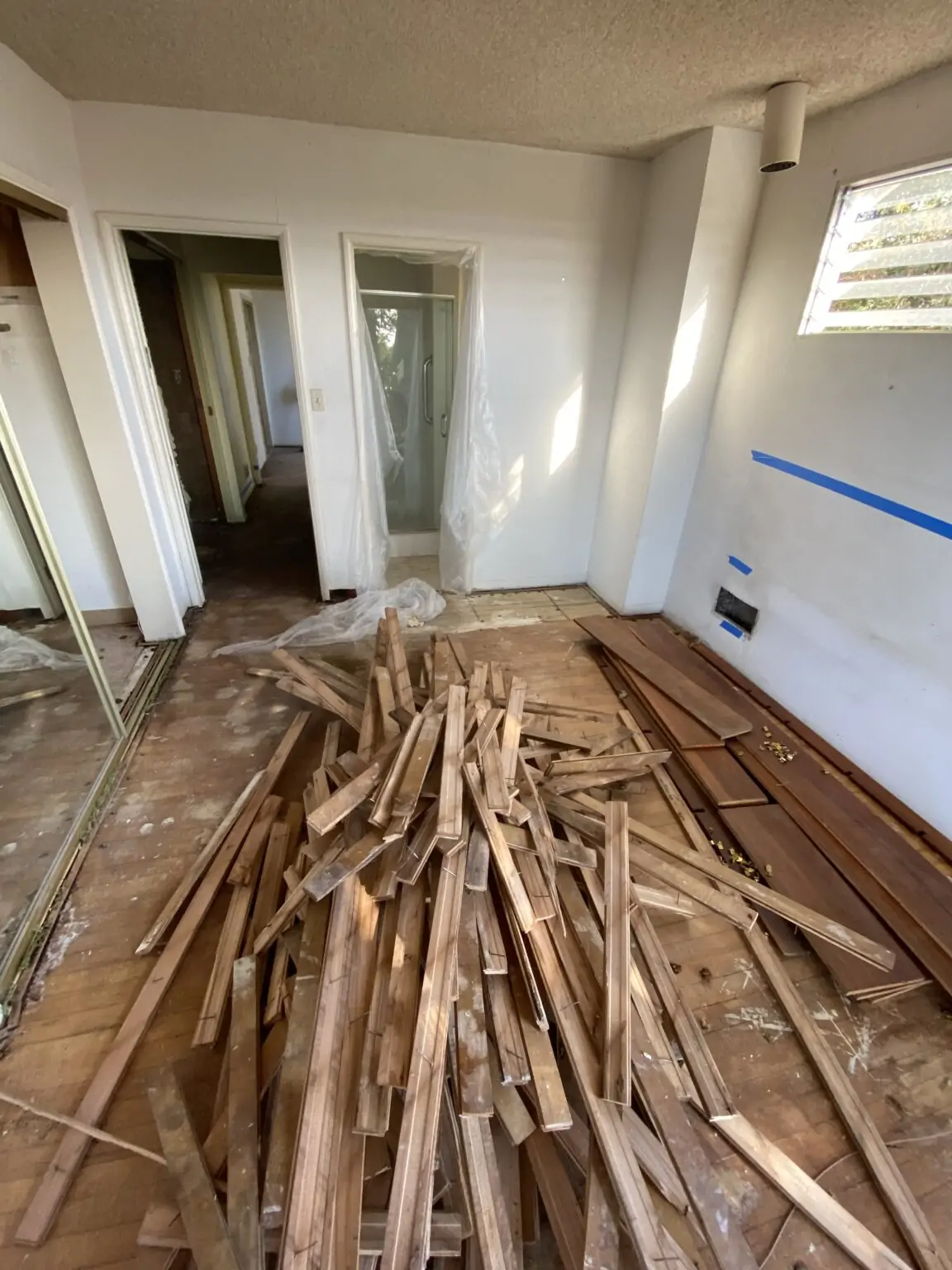
When a subfloor is contaminated at the wall edge, the materials next to it usually are too.
MDF and finger-jointed pine absorb urine readily and pass it into the drywall behind them.
Urine wicks up the paper face from the floor line — often without any visible stain. See our drywall urine odor removal page.
Raw end grain at the bottom of the jamb soaks up urine that runs down it, especially where pets mark doorways. We remove contaminated jambs as needed to treat the framing behind them; your contractor handles replacement.
In slab-on-grade areas, the concrete takes the place of the wood subfloor and needs its own treatment. See our concrete urine odor remediation page.
If only the subfloor is sealed and the wall line is left contaminated, the odor comes back through the walls after the new floor goes in. The inspection maps all of it so nothing gets missed.
Once prep is complete and the structure is dry, we apply one or two coats of our proprietary Odor Encapsulator. It’s applied to the properly prepared subfloor and bonds to the substrate, encapsulating the odor source so it can’t release back into the room above.
Our 5-Year Odor-Free Guarantee applies to qualifying structural surfaces that are properly exposed, prepared, and treated with the Odor Encapsulator System. If the original pet urine odor returns from those treated surfaces due to the same contamination we remediated, we return and re-treat at no additional charge during the guarantee period.
It doesn’t cover new pet accidents, untreated areas, concealed materials the customer elected not to expose, or work performed by others.
We handle the odor, then your flooring contractor takes it from there. Once the seal has cured, the subfloor is ready for new flooring — carpet, laminate, vinyl, LVP, or hardwood. We’re an odor remediation company, not a flooring installer. Our work ends with a sealed, odor-free base ready for installation.
It’s the most expensive mistake we see.
New flooring over an untreated subfloor doesn’t remove the odor — it covers it for a while. Eventually the odor works its way back into the living space, and the new flooring can absorb it too.
At that point the only fix is to pull the flooring back up to reach the subfloor. Some of the new flooring gets damaged coming out and has to be replaced. You pay for flooring twice, plus the remediation.
On a rental it’s worse. The new tenant has to move their furniture back out and live around the work — or the unit sits empty while it’s done.
Treat the subfloor first. Then install.
Subfloor damage usually shows up at turnover. The carpet comes up and the plywood underneath is stained, the tack strip is dark, and the baseboards are swollen.
What you need at that point is scope — how much has to come out, how much can be treated, and how long the unit is off the market. The inspection answers those questions with an itemized estimate, which is also the documentation you need for the deposit.
Treating the subfloor properly once is almost always cheaper than re-carpeting the unit twice.
New flooring in a house that smells faintly of urine is a warning sign, not a reassurance. A pet odor inspection before closing tells you whether the subfloor underneath is contaminated — while you can still negotiate.
New flooring over a contaminated subfloor may get through a walkthrough. Once the house is closed up and warms, the odor returns — and the buyer has a disclosure complaint about work that was just done. Treating the subfloor before the floor goes down, with documentation of what was found and treated, avoids that entirely.
Yes — that’s a large share of our subfloor work. We remove the failed coating, prep back to clean wood, verify the structure is dry, and seal it properly. In most cases the original coating failed because the wood was still wet or the surface wasn’t prepared, not because the product was bad.
Usually because the subfloor was still holding moisture, the coating went over residue instead of clean wood, or contamination outside the visibly stained area was never treated. Those areas keep releasing odor through and around the coated sections.
Only when the inspection shows the material is saturated past treatment, or when we need access to contaminated framing underneath. Warped subfloor and swollen baseboards are the usual indicators. We don’t remove material unless it’s necessary.
Yes. Once it soaks through the subfloor it reaches joists, sill plates, and insulation. That’s frequently what was missed when a previous treatment didn’t hold.
Many of the subfloors we see have already been professionally cleaned. Cleaning addresses what’s accessible on the surface. Contamination absorbed into the plywood core or that reached the framing is a different problem and needs a different approach.
Yes. Carpet removal, pad and tack strip removal, hardwood flooring removal, and adhesive removal are part of getting down to the contaminated subfloor.
Often, yes. When the subfloor is contaminated at the wall edge, baseboards, drywall, and door jambs usually are as well. The inspection tells you exactly which. Contaminated door jambs are removed as needed to treat the framing; your contractor handles replacement.
Yes, once the seal has cured. The seal stays in place permanently beneath the new floor. We don’t install flooring — your flooring contractor handles that after we’ve eliminated the odor.
Qualifying structural surfaces properly exposed, prepared, and treated with the Odor Encapsulator System, for five years, against the return of the original contamination we remediated. Not new accidents, untreated areas, or concealed materials the customer chose not to expose.
If the subfloor was already treated and the smell came back, the source was never reached. An inspection tells you exactly where the contamination is, how deep it goes, and what it will take to eliminate it.
Serving California since 1989·5-Year Odor-Free Guarantee on treated surfaces